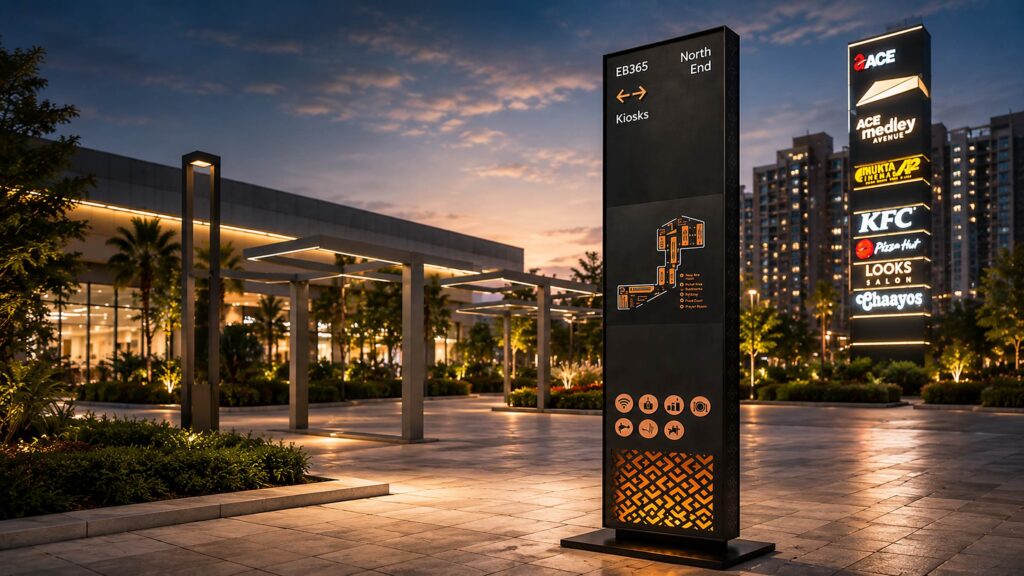
Drive up to any modern township, mall or corporate park and the first thing that tells you “you’ve arrived” is rarely the building — it’s the totem standing at the gate. A well-built totem or pylon sign is the tallest, clearest and most-photographed piece of branding on a project, and it does its job from hundreds of metres away, in daylight and after dark.
At SARA Enterprises we design, engineer and install totems and pylons across Greater Noida and the wider Delhi NCR. This guide explains what these structures are, where they work hardest, and what separates a totem that lasts a decade from one that fades in a season.
What is a totem or pylon sign?
A totem (also called a pylon) is a freestanding, self-supported vertical signage structure. Unlike a sign fixed to a wall, a totem stands on its own foundation, which means it can be placed exactly where visitors need it — at an entrance, a junction, a drop-off or a parking gate. Broadly, totems do one of two jobs: identification (announcing a single brand or address) and direction (helping people find their way once they are inside).
Where totems and pylons work hardest
Totems earn their place anywhere first impressions and navigation matter:
- Residential townships & gated communities — entrance identity and block-wise wayfinding (see our builder solutions).
- Malls & high streets — multi-tenant directory totems that list every brand at a glance.
- Corporate & IT campuses — arrival identity plus routing to towers, reception and parking.
- Hospitals, hotels & institutions — calm, legible direction for first-time visitors.
- Industrial parks & highways — tall pylons sized to be read from a moving vehicle.
The main types of totem signage
Most projects use a combination of these:
1. Identification pylons
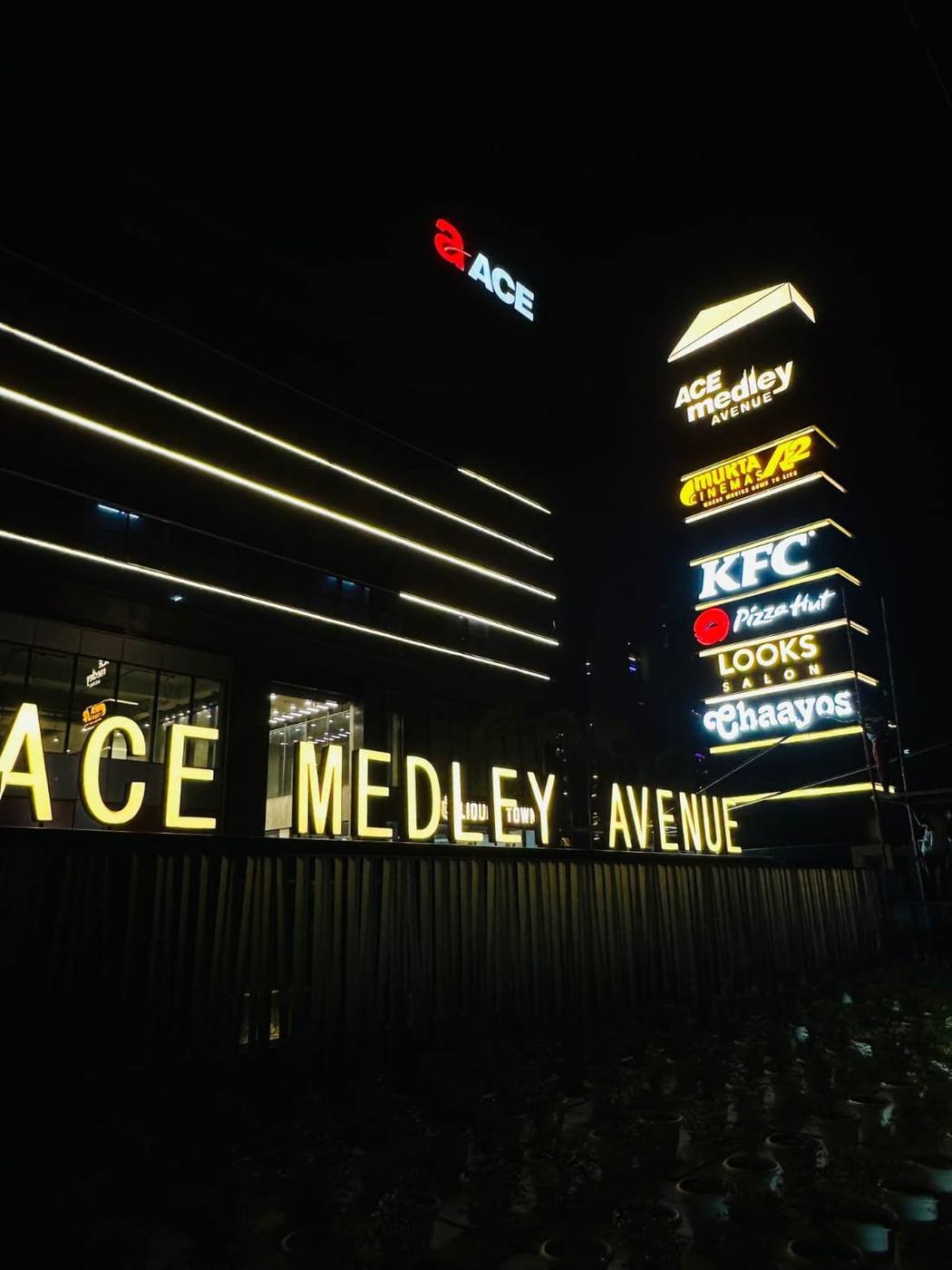
A single-brand structure built to be seen first — often illuminated so the name reads clearly at night. These are the landmark you describe when giving directions.
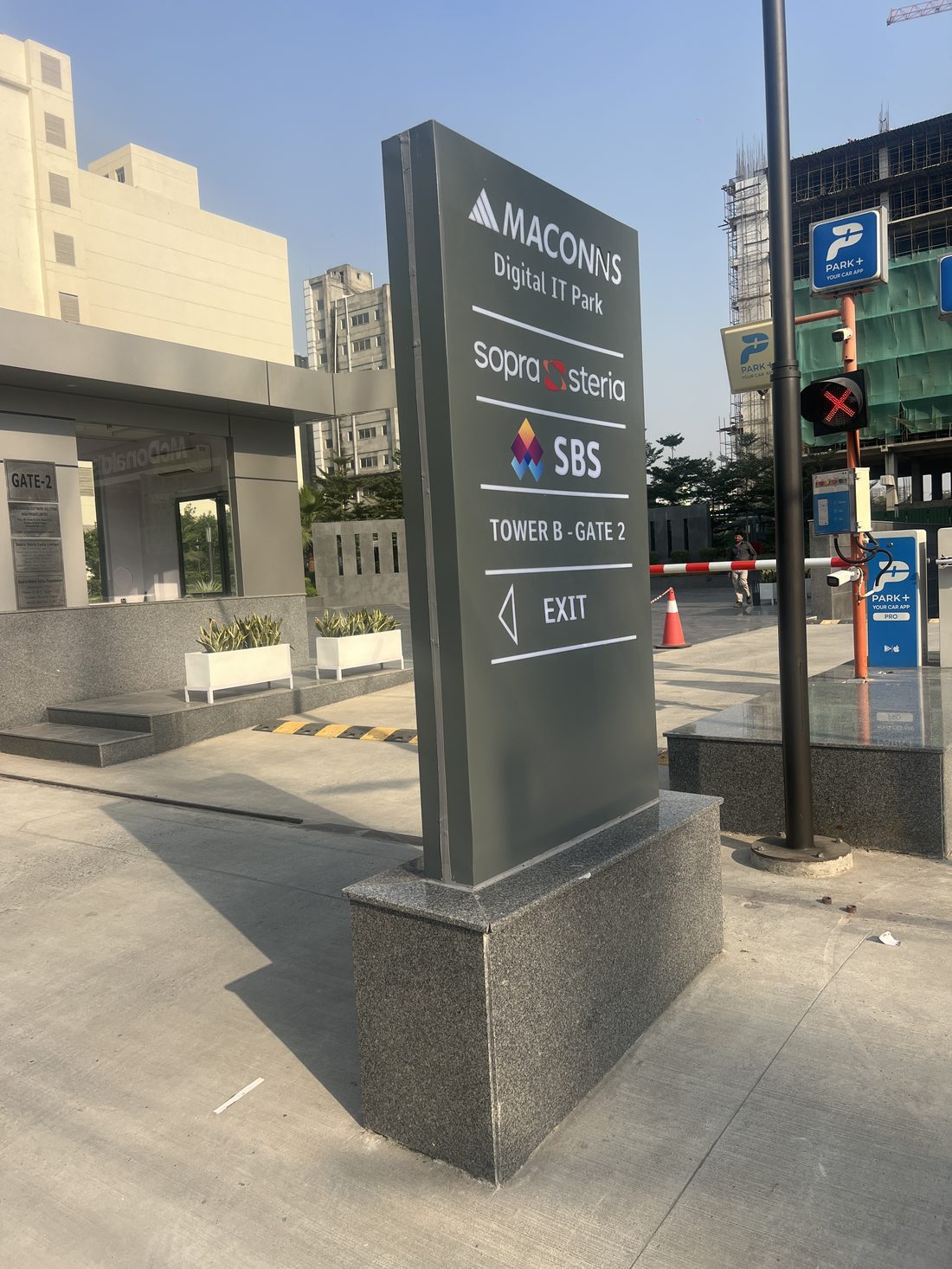
2. Multi-tenant directory totems
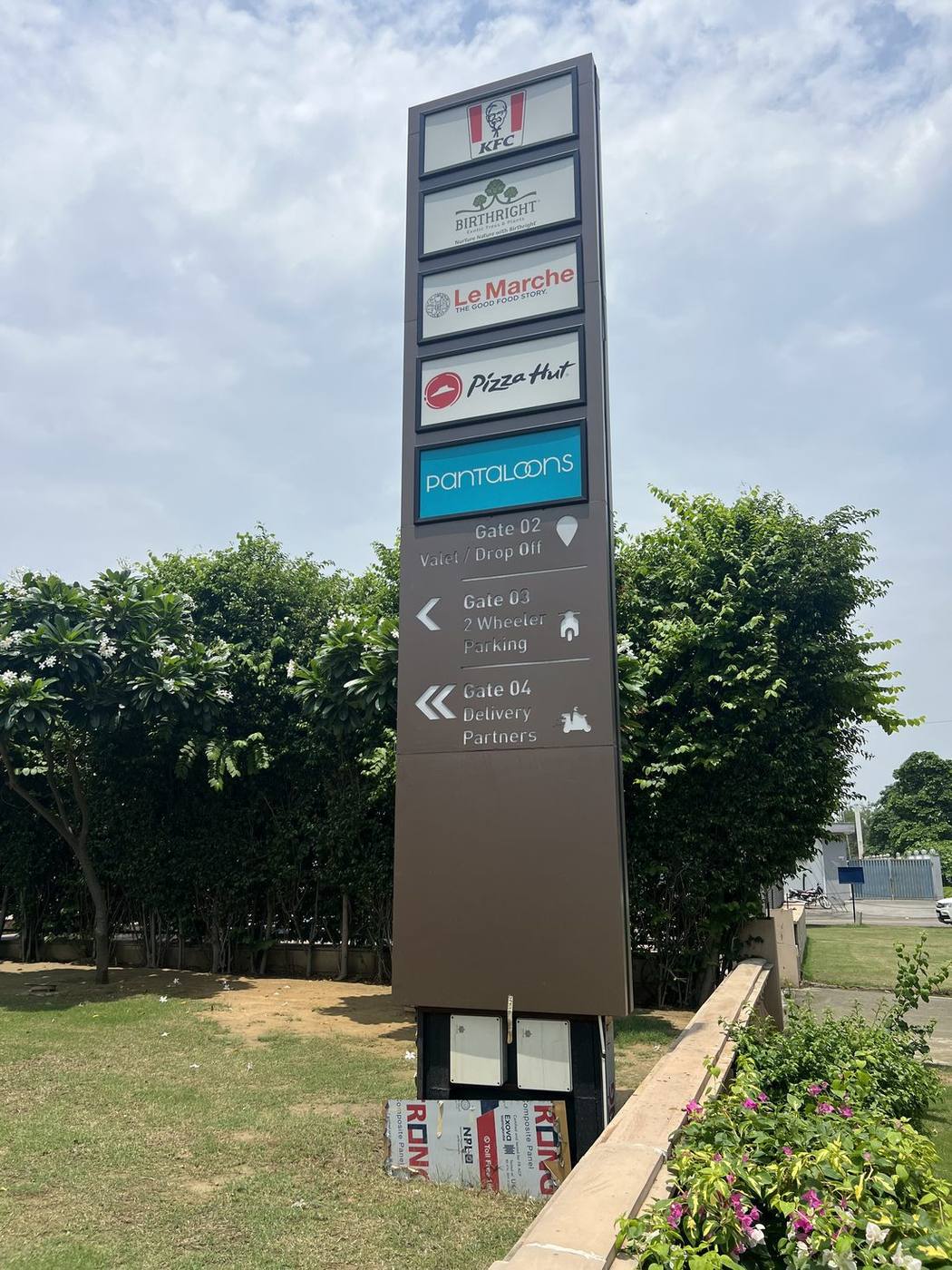
Common in malls and mixed-use developments, these carry several brands on individually lit panels so each tenant gets fair, ordered visibility on one clean structure.
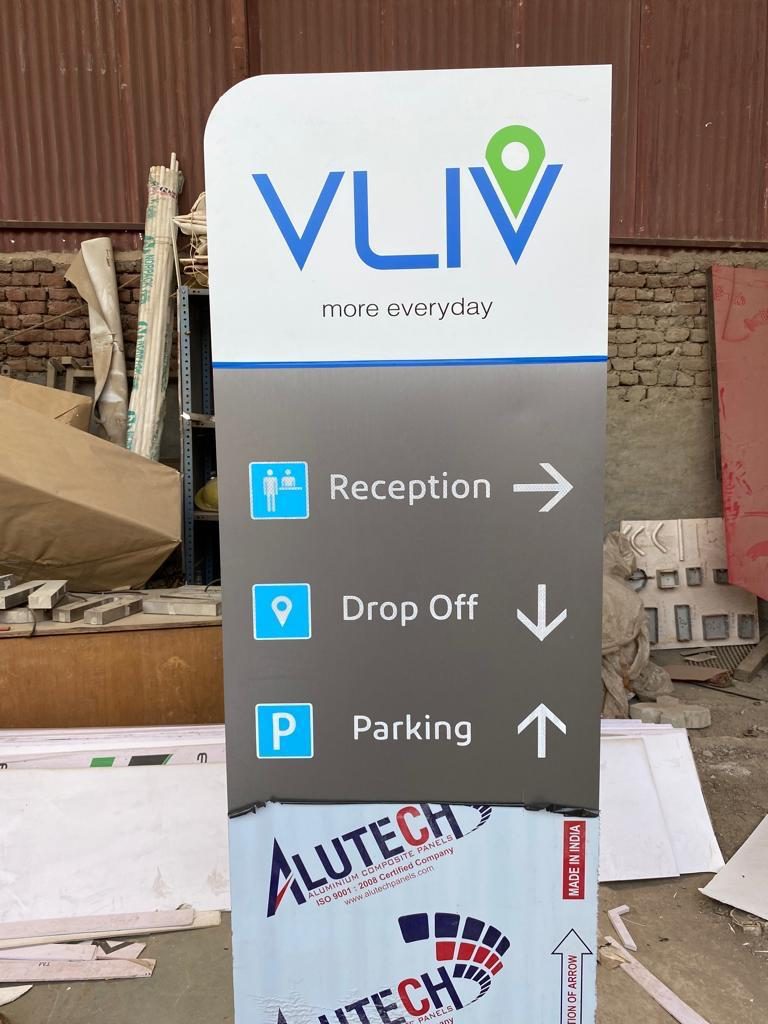
3. Wayfinding totems
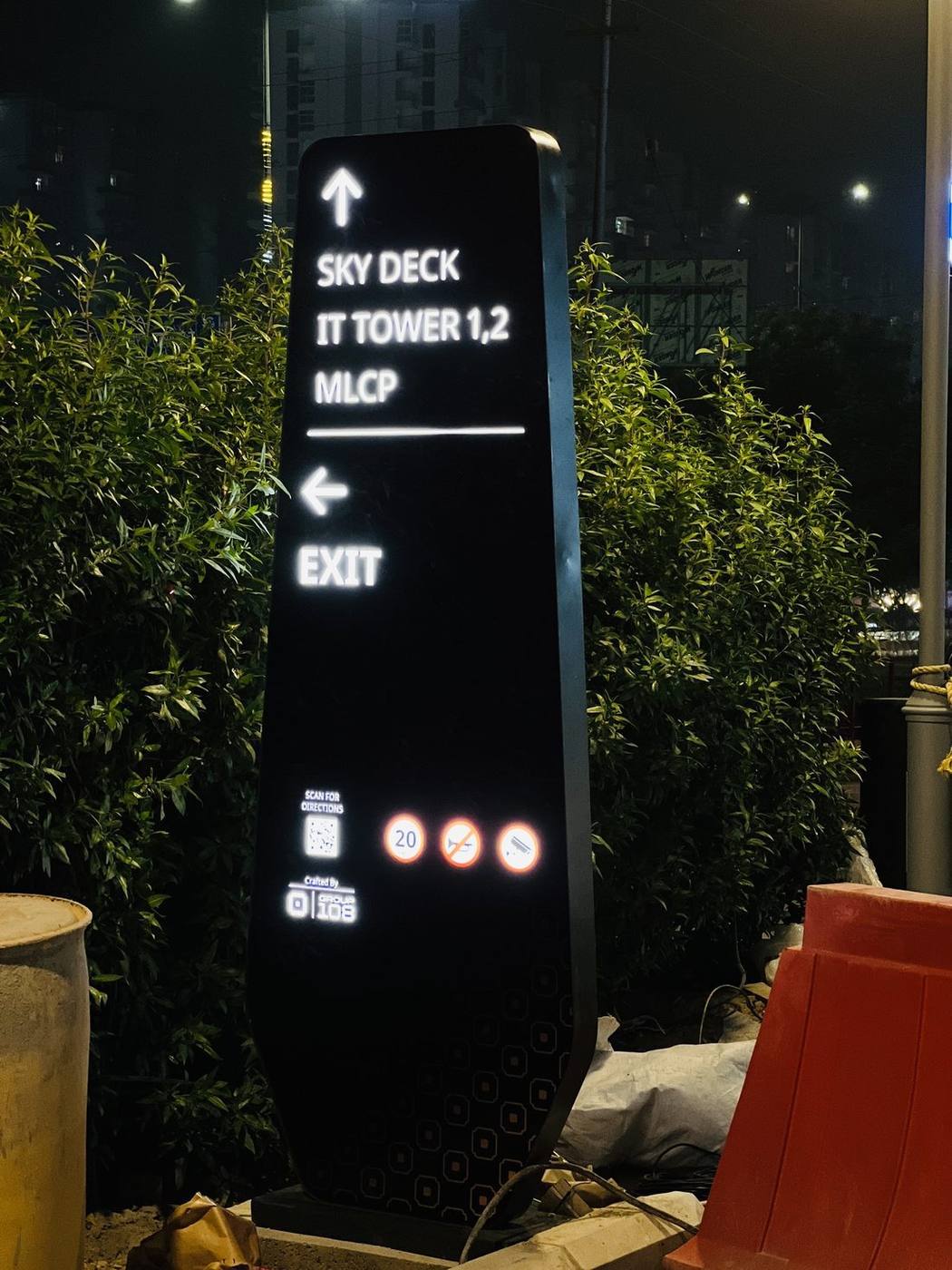
Direction-first totems with arrows, zone names and icons. They reduce confusion at the points where people hesitate — junctions, lift lobbies, drop-offs. They pair naturally with a full wayfinding system.
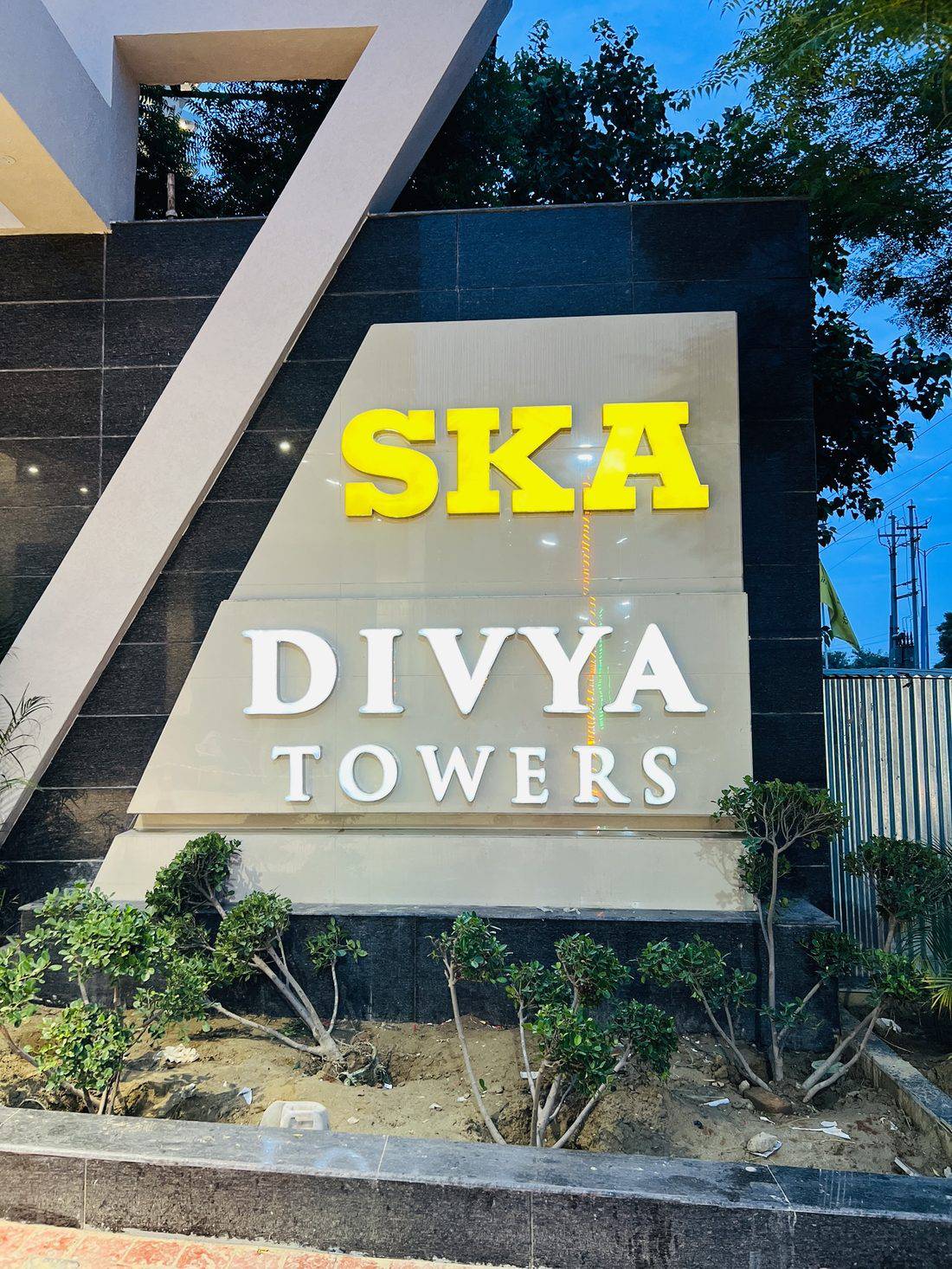
4. Monument & entrance signage
Lower, wider structures — often stone- or metal-clad with dimensional lettering — that frame the gateway of a premium address. See our project entrance signage.
What makes a totem that lasts
A totem is outdoors, exposed to sun, rain and wind every single day. The difference between one that ages gracefully and one that rusts, tilts or fades comes down to four things:
- Structural & wind-load engineering. Because a totem is self-supported, it must be calculated to stand firm in high wind. We engineer the frame and foundation for the height and site conditions — this is the part the eye never sees but the project depends on.
- The right materials. A galvanised or stainless MS/SS fabricated frame, weather-grade ACP or acrylic faces, and a durable powder-coated finish that holds colour outdoors.
- Even, efficient illumination. Quality LED and backlit build-ups give a uniform glow with no dark patches or hot spots — and sip power.
- A proper foundation. The right footing keeps a tall structure plumb and safe for years.
Recent totem & pylon projects
From illuminated multi-tenant pylons to monument gateways and campus wayfinding totems, our recent work spans retail, residential and corporate sites across Delhi NCR. You can see more on the Totem Poles & Pylons page.
How SARA delivers a totem project
We keep the whole job under one roof, so design intent survives all the way to installation:
- Site survey — sightlines, traffic flow, viewing distance and ground conditions.
- Design — structure, panel layout and brand-matched artwork.
- Engineering — frame and foundation calculated for height and wind.
- Fabrication — built and finished in-house for quality control.
- Installation & handover — safe on-site erection and electrical commissioning.
Frequently asked questions
What is the difference between a totem and a pylon sign?
In practice the terms are used interchangeably — both describe a tall, freestanding sign on its own foundation. “Pylon” often refers to taller roadside identification structures, while “totem” is commonly used for shorter directory and wayfinding units. The engineering principles are the same.
How tall can a totem sign be?
Height is driven by viewing distance and the site. A pedestrian directory totem may be a couple of metres, while a roadside identification pylon can be much taller. Whatever the height, it must be engineered for wind load — which is exactly what we calculate for each site.
Are totem signs illuminated?
Most are. Backlit acrylic faces or edge/LED illumination keep the sign working after dark — essential for entrances, malls and roadside locations. Non-illuminated monument signs are also an option where a softer look is preferred.
How long does a totem sign last outdoors?
With a galvanised or stainless frame, weather-grade faces and a quality powder-coated finish, a well-built totem stays sharp for many years. Longevity comes from the materials and engineering far more than from the artwork.
Can one totem list multiple brands?
Yes — multi-tenant directory totems are designed for exactly this, with individually lit panels so every brand gets clear, ordered visibility on a single clean structure.
Planning a totem or pylon for your project?
Whether it’s a township gateway, a mall directory or a corporate campus, we’ll survey your site and design a totem that gets seen and lasts. Talk to SARA Enterprises on +91 95400 78708 or +91 95400 78708, or request a free quote.